- 20/08/2025 13:04:18
- Viewed: 155
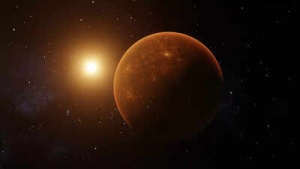
Recent research indicates Mercury, the solar system's smallest planet, is shrinking due to its cooling interior. As Mercury's core loses heat, the crust adjusts, forming thrust faults and scarps. New measurements reveal a radius decrease of 2.7 to 5.6 kilometers, offering insights into Mercury's tectonic activity and geological evolution, enhancing our understanding of small rocky planets.
- 20/08/2025 13:04:18
- Viewed: 153
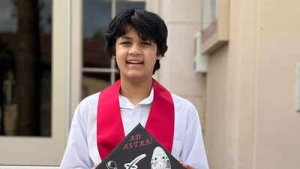
Kairan Quazi, the 16-year-old prodigy, is transitioning from SpaceX's Starlink project to Citadel Securities as a quant developer. After graduating from Santa Clara University at 14, he defied age barriers at SpaceX. Now, he's set to apply his unique engineering and problem-solving skills to quantitative finance, overcoming challenges related to age-based biases in the professional world.

- 20/08/2025 13:04:18
- Viewed: 150
SpaceX achieved a significant milestone in 2025, launching its 100th Falcon 9 mission, deploying 24 Starlink satellites and expanding its constellation to over 8,100 active units. Booster 1088 completed its ninth successful flight, landing on the drone ship, marking SpaceX's 489th Falcon 9 landing. This feat underscores SpaceX's reusability advancements and its impact on global internet coverage.
- 18/08/2025 03:01:27
- Viewed: 190
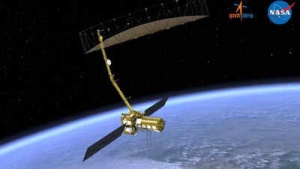
NASA and ISRO have successfully deployed the world's largest radar antenna, a 33-foot structure, as part of the NISAR mission. Orbiting 460 miles above Earth, it will capture high-resolution radar images, penetrating clouds and darkness. This breakthrough will provide critical data on climate change, natural hazards, and agricultural trends, offering global benefits through open data access.

- 18/08/2025 03:01:27
- Viewed: 167
Astronaut Shubhanshu Shukla received a grand welcome in Delhi after his historic mission to the International Space Station (ISS) as part of the Axiom-4 mission. He was greeted by ministers, ISRO chairman, and space enthusiasts. Shukla is scheduled to meet PM Modi and participate in National Space Day celebrations, with Parliament set to discuss his mission and India's space program.
- 16/08/2025 06:01:30
- Viewed: 168
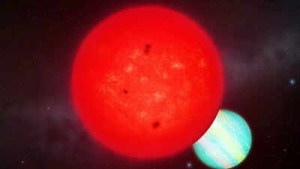
Astronomers have spotted a giant planet, TOI-6894b, orbiting a tiny red dwarf star, challenging existing planet formation theories. This gas giant, larger than Saturn but less massive, orbits a star only one-fifth the Sun's mass. The discovery suggests that large planets might be more common around small stars than previously believed.

- 16/08/2025 06:01:30
- Viewed: 171
Scientists have achieved a significant breakthrough in decoding inner speech, offering hope for individuals with speech impairments. Researchers successfully translated imagined words into text using brain implants and AI. The study, part of the BrainGate2 trial, demonstrated that brain signals for imagined speech are similar to those for attempted speech.
- 16/08/2025 06:01:30
- Viewed: 193
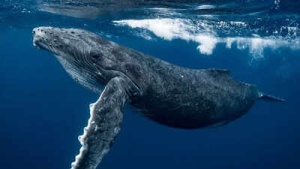
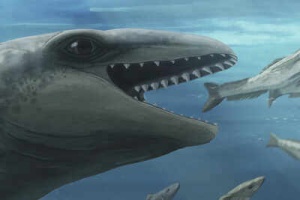
A 26-million-year-old whale skull, belonging to the newly identified Janjucetus dullardi, has been unearthed at Jan Juc Beach in Australia. This Oligocene-era predator, unlike modern baleen whales, possessed sharp teeth and large eyes, indicating an active hunting lifestyle. The remarkably preserved fossil offers crucial insights into whale evolution, particularly the transition from toothed predators to filter feeders.
- 15/08/2025 11:01:49
- Viewed: 152
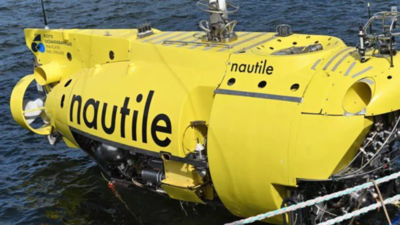
India has achieved a significant milestone with its aquanauts successfully reaching depths exceeding 5,000 metres in the North Atlantic, marking progress in the Deep Ocean Mission. This follows closely after an Indian astronaut's visit to the International Space Station.
- 15/08/2025 11:01:49
- Viewed: 156
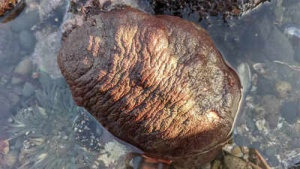
Chitons, unassuming marine molluscs, possess teeth harder than steel, thanks to a unique magnetite-based nanostructure. Scientists are studying this biological marvel to inspire the creation of super-durable materials. This research could revolutionize industries by enabling the development of advanced cutting tools, biomedical implants, and self-repairing structures, mimicking nature's ingenious design.
- 15/08/2025 11:01:49
- Viewed: 165
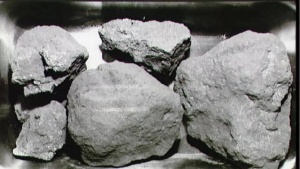
In 2002, Thad Roberts, a NASA intern, stole moon rocks from Johnson Space Center. He was aided by Tiffany Fowler and Shae Saur. The stolen rocks were valued at $21 million. Roberts claimed it was for love, but the FBI found he planned to sell them. Roberts and his accomplices were arrested. The heist damaged scientific research.
- 15/08/2025 11:01:49
- Viewed: 185
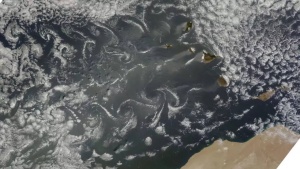
In May 2016, NASA satellites detected ten unusual dark voids within cloud cover above Heard Island, a remote volcanic landmass. These formations, linked to von Kármán vortices, exhibited an atypical darkness, tight spiral structure, and a sharp directional change. This rare event provides scientists with a unique opportunity to study small-island wind effects and their impact on atmospheric patterns.
- 15/08/2025 11:01:49
- Viewed: 172
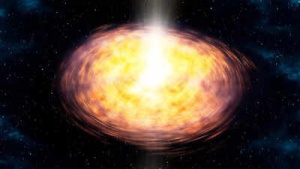
A groundbreaking study by ETH Zurich reveals that solid rock in Earth's D" layer, located deep within the mantle, can move like a fluid while remaining solid. Researchers used diamond anvil cells and X-ray diffraction to observe mineral behavior under extreme conditions, explaining seismic wave anomalies and linking deep mantle processes to plate tectonics, volcanism, and Earth's magnetic field.
- 15/08/2025 11:01:49
- Viewed: 170
Science News: Long before whales became the gentle giants of today, some of their ancestors were small, fierce, and strange.

- 15/08/2025 06:01:36
- Viewed: 148
NASA astronaut Don Pettit captured a stunning near-infrared image of the Ganga River delta from the ISS, revealing intricate details of its ecosystem. The photograph highlights vegetation health, water distribution, and land use, aiding scientists in monitoring environmental changes. This image underscores the delta's significance as a biodiversity hotspot and its vital role in environmental stability.
- 13/08/2025 13:01:38
- Viewed: 157
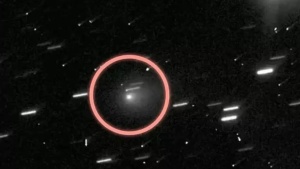
NASA has shared new details about 3I/ATLAS. It is an interstellar object moving at 209,000 km/h. Hubble images show it is smaller than thought, about 5.6 km wide. It is a comet with a glowing tail. Scientists estimate it is eight billion years old. It poses no threat to Earth. NASA uses telescopes to study it.
- 13/08/2025 13:01:38
- Viewed: 172
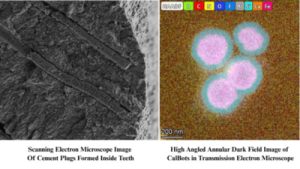
Researchers at IISc and Theranautilus create 'CalBots'. These magnetic nanobots address tooth sensitivity. CalBots seal dentinal tubules using a bioceramic formula. Tests on extracted teeth show promising results. Animal trials demonstrate complete behavioral recovery. The team sees this as a step towards advanced nanorobotics. This innovation offers lasting relief for millions. The CalBots are made from safe materials.

- 13/08/2025 13:01:38
- Viewed: 157
Henrietta Swan Leavitt worked as a Harvard “computer” earning just 30 cents an hour, yet her groundbreaking discovery of the period-luminosity relationship transformed astronomy. Her work enabled scientists to measure cosmic distances and understand the expanding universe. Despite this monumental contribution, Leavitt never received a Nobel Prize during her lifetime, highlighting the challenges faced by women in science.
- 13/08/2025 13:01:38
- Viewed: 161
Scientists discovered the oldest water on Earth, dating back billions of years, in a Canadian mine. This ancient water, isolated for millennia, provides unprecedented insights into Earth's early conditions and potential for life in extreme environments. Professor Barbara Sherwood Lollar's team's findings challenge existing assumptions and open new avenues for astrobiological research.
- 12/08/2025 04:01:41
- Viewed: 157
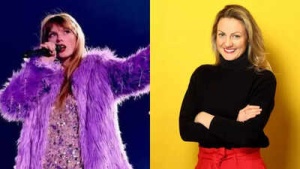
Taylor Swift's ascent to global superstardom is attributed to strategic empire-building beyond music, as analyzed by a NASA engineer. Swift has cultivated a loyal fanbase through immersive experiences and reclaimed ownership of her music, disrupting industry norms. Her relentless work ethic and strategic decisions have propelled her into a powerful figure, offering a blueprint for success in any field.



 Jofra Archer Returns to England Test Squad After Four-Year Absence
 Deepti Sharma Opts Out of The Hundred 2025 Amid Heavy Workload; Knott Named Replacement
 Jamie Overton takes indefinite break from red-ball cricket
 Rahul Regrets Pant's Costly Run-Out Before Lunch, Shifting Momentum in Lord's Test
 Kajol's Hilarious Take on Ajay Devgn Look-Alike Meme Goes Viral: 'Singham Will Flip Out!'
 Conway Replaces Injured Allen; New Zealand Adds Depth for Tri-Series Tournament
 Siraj Hit With Fine, Demerit Point for Duckett Send-Off at Lord's Test
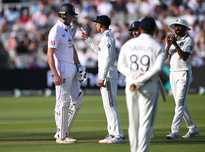 Southee Accuses Gill of Hypocrisy Amid Tensions in Lord's Test Clash